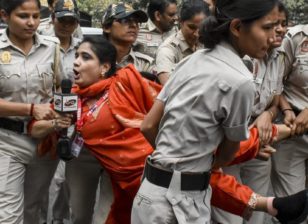

What the Cockroach Janta Party protests reveal about Indian Muslim leadership
The response to movement exposes the cost of allowing legitimate caution to become a substitute for civic engagement.
By Rasheed Ahmed
Earlier this fortnight, in The Milli Gazette, I argued that Indian Muslims should resist evaluating every emerging movement solely through the lens of immediate Muslim interests. Democracies are not defended only when our own rights are threatened. They are defended whenever citizens insist that power remain accountable.
Over the past several weeks, I have watched the Cockroach Janta Party movement grow. I have also watched the Muslim response – not only the response of ordinary Muslims, but that of people and institutions regarded as community leaders.
Generally speaking, in spontaneous moments, while individual Muslims participate with conviction and passion, some established Muslim organisations and community leaders remain hesitant. Some wait. Some criticise. Some identify shortcomings. Others search for hidden motives. A number of them simply remain silent.
This scepticism is not irrational. Decades of surveillance, selective prosecution, media demonisation, communal violence and state manipulation have cultivated understandable caution. Distrust is often manufactured through repeated experience.
Nor is suspicion toward the Cockroach Janata Party uniquely Muslim. It has been widespread across many political and ideological spaces outside the Bharatiya Janata Party ecosystem. Veteran commentators, civil society activists and political observers have worried that the movement could resemble the Anna andolan, the anti-establishment mobilisation that, in their view, helped create the political conditions that brought the BJP to power in 2014.
For some experienced analysts, suspicion was the default response. Scroll’s own early coverage raised questions about the movement’s undefined ideology and its vulnerability to co-option. Such concerns were reasonable. They make the distinction between scrutiny and disengagement more important, not less.
Read More >>
Photo by Naresh Fernandes