Yusuf Meher Ali: The Forgotten Freedom Fighter Behind “Simon Go Back” and “Quit India”
By Afroz Alam Sahil
On the morning of 3 February 1928, as the all-white Simon Commission stepped off its ship at Bombay port, a young law graduate dressed as a porter pushed through the crowd waving a black flag and shouting two words that would follow the Commission across India: Simon Go Back. His name was Yusuf Meher Ali (Meherally). Fourteen years later, he would give the freedom movement its most famous slogan of all.
Meherally, born in Bombay 123 years ago today, was a revolutionary strategist, a fearless orator and a socialist politician who believed independence had to change the lives of ordinary people. Social justice, economic equality and the rights of workers and peasants remained central to his politics alongside the struggle against colonial rule. He drew students, young people and workers into the movement, helped found the Congress Socialist Party, and became the youngest Mayor Bombay had ever had — at 47, after eight terms in prison, he was dead.
But Meherally’s legacy cannot be reduced to a slogan.
Mastermind of Revolutionary Slogans
Yusuf Meher Ali not only coined the slogan “Simon Go Back,” but also raised it himself, dressed as a porter, while waving a black flag at the Bombay port. But his role did not end there. The entire “Quit India” movement of 1942 was also the brainchild of Yusuf Meher Ali.
According to Justice Wickenden’s report on the movement, when Gandhi traveled from Bombay to Madras and stopped in Dharwad, he shared with the people what he had learned from Yusuf Meher Ali. Gandhi then persuaded Congress leaders to adopt Meher Ali’s ideas, insisting that if they refused, he would carry forward the campaign on his own responsibility—whether or not the Congress supported him. In the end, faced with Gandhi’s resolve, the Congress had no choice but to accept Yusuf Meher Ali’s proposal. It was also Yusuf Meher Ali who coined the electrifying slogan “Quit India,” a cry that breathed new life into the freedom struggle.
Justice Wickenden’s report clearly states that Yusuf Meher Ali was the author of a pamphlet titled “Quit India” that circulated during those days.
On 25 July 1942, Meher Ali addressed a secret gathering of socialist workers and students at Fergusson College in Poona. In his speech, he declared that “everything must be done to free the country from slavery, even if it means civil war, anarchy, or revolution.”
Justice Wickenden’s report also documents the key activities he carried out at this so-called secret camp. According to the report, on 1 August 1942, Meher Ali delivered a fiery speech in Bombay in support of the movement, and on 8 August he gave a similar address in Bengal, urging people to obstruct every activity of the British government.
During this campaign, Yusuf Meher Ali also coined another slogan that is less well known today: “Every man a Congressman, every home a Congress house.” The slogan quickly gained popularity at the time and proved to be a great advantage for the Congress movement.
Gandhi’s Concern for His Health
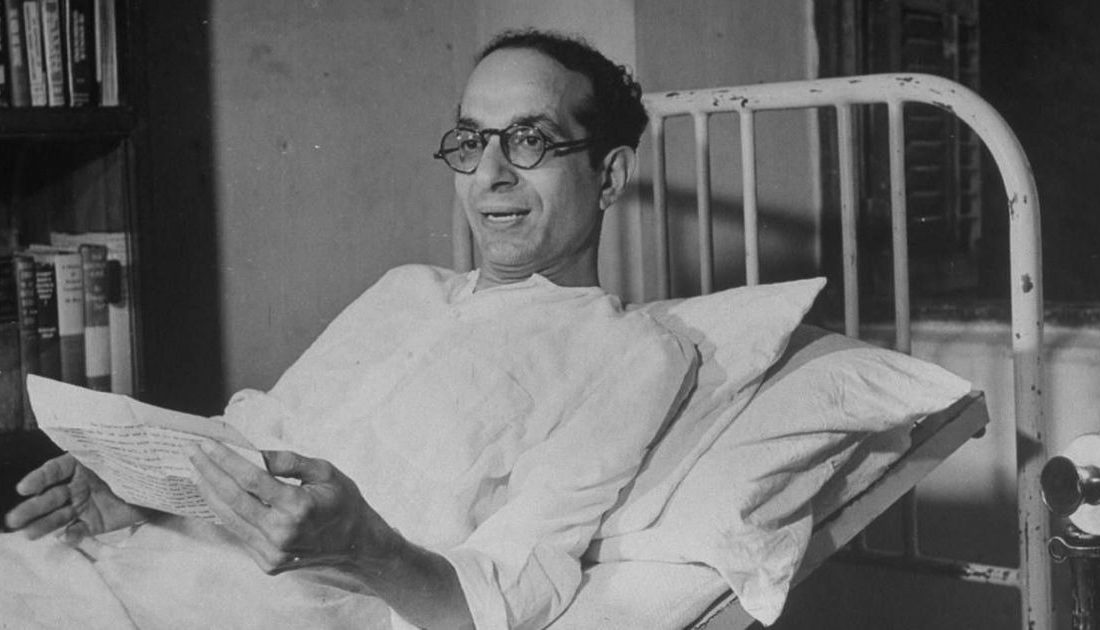
Born on September 23, 1903, Yusuf Meher Ali—a prominent Bombay businessman—spent much of his 46 years battling ill health. Reports of his condition often appeared in newspapers. For example, The Times of India on April 12, 1945, noted: “Yusuf Meher Ali has been unwell for some time. Dr. Jivraj Mehta has advised him to extend his rest period.” Yet despite his frailty, Meher Ali remained determined to free his country from British rule.
Gandhi was deeply concerned about his health and often inquired after him. This is evident from several letters written by Gandhi, which reflect the affection and regard he held for Yusuf Meher Ali.
A New Political Party of Muslims
In 1929, a new political party of Muslims was formed in Bombay. Yusuf Meher Ali was not only a member of the party but was also appointed temporary secretary of the committee formed to draft its rules, regulations, and programme. The new party was called the “Congress Muslim Party.”
The party’s primary aim was to combat communal and reactionary forces while seeking to protect the legitimate interests of Muslims through the Congress. In 1934, the “Congress Socialist Party” was formed, and Meher Ali was among its founders. The Socialist Party regarded him as the “conscience of the socialist movement in India.”
Founder of the All India Students Federation
After earning a bachelor’s degree in economics and history from Elphinstone College, Bombay, Yusuf Meher Ali went on to obtain a law degree from Government Law College. From his student days, he actively participated in movements against British rule. Although he earned a law degree, he was refused a licence to practise because of his political activity. He turned instead to organising workers and young people, and in 1928 helped found the Bombay Youth League. The organization aimed to address the problems of farmers and workers and ensure they received rightful representation. Alongside the youth, he opposed unjust British policies—sometimes confronting the police directly and even risking his life in the struggle.
Yusuf Meher Ali was also among the founders of the All India Students Federation (AISF) and became its president in 1941. Under his leadership, the seventh session of the AISF was held in Patna on 27–28 December 1941. In this meeting, he emphasized the importance of student participation in politics and highlighted ways students could actively address communal issues.
Youngest Mayor of Bombay
Yusuf Meher Ali was a member of the Bombay Municipal Corporation from April 1935 to August 1943. He then served the people of Bombay as Mayor in 1942–43. He was the youngest Mayor in the corporation’s history. In office, he insisted that the city’s defence be run by Indians rather than the British, and Bombay became the only city in India whose municipal corporation was allowed to run its air-raid precautions scheme.
Interestingly, when he was elected Mayor, he was imprisoned in Lahore Jail. Yet, he continued to manage the affairs of Bombay from prison.
After India’s independence, he was elected to the Bombay Legislative Assembly in 1949 as a Socialist Party candidate, where he continued to work for the people.
A Deep Friendship with Books and Prison
Yusuf Meher Ali had a deep connection with both books and prison. By the age of 46, he had been imprisoned eight times, including one period of two years. During his time in prison, he also wrote several important books. He was imprisoned again during the 1942 Quit India movement.
While in prison, Meher Ali suffered a severe heart attack. He was admitted to St. George Hospital for treatment, but refused to accept it on the condition that two of his fellow prisoners were suffering from the same illness and should also be provided with the same special treatment facilities.
The government refused to accept his condition. Meher Ali, unwilling to accept any special favour from the government while his fellow prisoners were denied the same treatment, returned to prison.
By the time Yusuf Meher Ali was released from prison in 1943, his health had deteriorated considerably. According to a Times of India report, his friends were shocked to see him after his release. He was described as having been reduced to a mere “bag of bones.”
Doctors advised him to rest alongside his treatment, yet Meher Ali continued to remain politically active. When his condition worsened in 1947, he was taken to the United States for treatment. Even there, he did not withdraw from public life. In 1948, he led the Indian delegation at the World Youth Congress in New York and, later that year, represented the Congress Socialist Party at the World Congress of Culture in Mexico.
At the end of 1948, Yusuf Meher Ali returned to India and immediately became active once again in working for the welfare of the people of independent India. But this time, fate was not on his side. His heart condition once again forced him into hospital.
On the morning of July 2, 1950, he suffered another severe heart attack and passed away. He was only 46 years old.
Following Yusuf Meher Ali’s death, India’s first President, Dr. Rajendra Prasad, expressed his heartfelt condolences to his family and friends, saying, “The death of a Brilliant speaker, effective writer, efficient organizer, warm-hearted friend and devoted servant of the country, at an early age is a great loss to the public life of the country.” At the same time, Prime Minister Nehru said that Yusuf Meher Ali was “not only a brave and irrepressible soldier in freedom’s cause but had also a rare quality and high integrity which commanded respect.” He added, “We are all the poorer for the loss of this generous-hearted human being and beloved friend.”