Bi Amma: The Fearless Mother Who United a Nation and Inspired Generations
By Afroz Alam Sahil
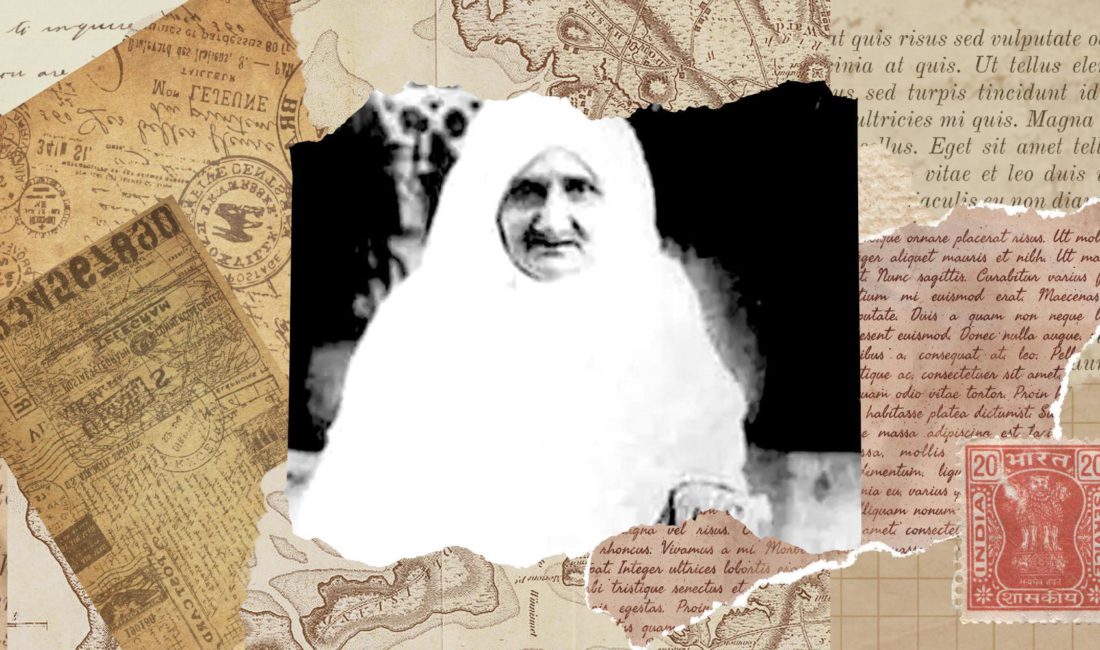
About a hundred years ago, during the 1910s and 1920s, a woman known as “Amma” (mother) was spoken of with great admiration across India. During the Khilafat Movement, she became a powerful symbol of national unity and awakening. Mahatma Gandhi held her in the highest regard, affectionately calling her Amma and deeply trusting her leadership. On one occasion, before going to jail, Gandhi appointed her as his deputy, instructing that all decisions in his absence should come from her. He even directed that she should never be arrested. This remarkable woman was Abadi Bano Begum, known throughout India as Bi Amma.
On November 20, 1924, Mahatma Gandhi wrote in Young India: “Who does not know the stately figure of Bi-Amma or her voice at public gatherings? Though old in years, she possessed the energy of youth.”
Bi Amma’s Personal Life
Bi Amma, was a native of Uttar Pradesh’s Rampur. There is some uncertainty about her exact date of birth. Her son, Muhammad Ali Jauhar, wrote in The Comrade on November 21, 1924: “The exact date of Bi Amma’s birth is not known. However, she used to say, ‘I clearly remember being about five or six years old at the time of the rebellion.’ Based on this, I have estimated her year of birth to be 1852, making her 72 years old at the time of her passing.” At a young age, she was widowed and left to raise three small children on her own
In those difficult circumstances, Bi Amma ensured that her sons received both religious and modern education. She not only encouraged them to dedicate themselves to India’s independence but also became actively involved in mobilizing women for the freedom movement.
The Political Life of Bi Amma
Bi Amma’s political journey began when her sons, the Ali brothers, were arrested under the Defence of India Act. Maulana Muhammad Ali had written a strongly worded response to an article in The London Times, which led to his detention—first under house arrest in Chhindwara and later in Betul Jail.
At that time, Bi Amma spoke with great pride and conviction: “This honour—imprisonment—is granted only to those whom God gives the strength to endure suffering for the sake of their faith and their country.”
Women played an equally vital role in both the Khilafat and Non-Cooperation Movements. When Muhammad Ali Jauhar and Shaukat Ali were imprisoned, Bi Amma stepped forward to take their place. She began traveling across India—carrying the message of non-cooperation and the Khilafat cause to every city, town, and village.
Bi Amma spoke out boldly against the British government’s repressive Rowlatt Act, spreading the call for non-cooperation and recounting the brutalities committed in Punjab after the Jallianwala Bagh massacre. Her speeches stirred hearts and inspired action. Moved by her words, women across India donated their jewelry and ornaments to the Tilak Fund and the Khilafat Committee, raising donations worth several lakhs of rupees.
The British authorities were alarmed by her growing influence and tried to crush her spirit by imprisoning her two sons. But Bi Amma stood firm and declared defiantly: “Doodh hargiz na bakhshungi tum ko; main dilāvar nah samjhungi tum ko; jaan, beta, Khilāfat pe de do.”
She sent a message to her sons while they were imprisoned, urging them to remain steadfast in the struggle for India’s freedom and the rights of Muslims. In her message, she wrote: “My sons, be courageous and do not abandon the fight; do not even ask for forgiveness.”
Her activism often brought her into direct conflict with the authorities—she was tear-gassed and beaten with police batons several times—but her resolve never wavered.
The All India Women’s Congress
Bi Amma was the first Indian woman to preside over the All India Women’s Congress, convened to discuss India’s independence. This historic meeting took place on December 30, 1921, in Ahmedabad, Gujarat, and was attended by notable leaders such as Sarojini Naidu, Kasturba Gandhi, Anusuya Bai, Begum Hasrat Mohani, Amjadi Begum, Begum Mukhtar Ahmed Ansari, and Begum Saifuddin Kitchlew.
In her presidential address to the Congress, Bi Amma stated: “A person who is not loyal to God cannot be loyal to any government established by man. We must cultivate unity and harmony among ourselves. Experience has shown that the country cannot be liberated without fostering unity among the diverse communities and sects living here.”
Mahatma Gandhi wrote in detail about this All India Women’s Congress in Young India on January 5, 1922, praising Bi Amma’s leadership. Gandhi was always concerned for her well-being. Whenever he wrote letters to the Ali brothers, he would make a point of asking about Bi Amma. He consistently admired her for her independence, courage, and unwavering self-identity.
Mahatma Gandhi wrote in the Gujarati newspaper Navjivan on November 30, 1924: “That lady had unbounded love for religion. Her passion for religion was worth emulating. Her patriotism was rooted in her love for religion and this very same love was responsible for her desire for Hindu-Muslim unity. She had finally come to such a state that she made no distinction between religion, patriotism and communal unity.”
Death and Legacy
On November 13, 1924, Bi Amma passed away. On November 23, 1924, a commemorative assembly was held in Bombay, organized by the Provincial Congress Committee, Bombay Swarajya Dal, Central Khilafat Committee, Rashtriya Mahila Sabha, and National Home Rule League to honor her memory. The assembly was presided over by Sarojini Naidu.
During the event, Mahatma Gandhi said: “Bi Amma was very far-sighted and whenever I went to see her at Delhi she used to pray for wisdom for Hindus and Muslims that they might be united…”
Mahatma Gandhi wrote in the Gujarati newspaper Navjivan on November 30, 1924: “Every soul is immortal; such a pure soul, however, manifests its immortality clearly. Although Bi-Amma is no longer physically with us, her deeds and her words will not die so long as Hindus and Muslims survive.”