IAMC Warns of Deepening Crackdown on Civic Freedoms as India Added to Global Watchlist
Washington, D.C. — The Indian American Muslim Council (IAMC) today expressed grave concern following India’s addition to the CIVICUS Monitor Watchlist, a global tracker of civic freedoms across 198 countries and territories. The watchlist flags countries experiencing a notable decline in respect for fundamental freedoms, and the CIVICUS Monitor cited a “rapid deterioration” of civic space under Prime Minister Narendra Modi’s third term as the basis for India’s inclusion.
India, already rated “Repressed” by the CIVICUS Monitor, was added to the latest watchlist alongside Bahrain, Burkina Faso, Ecuador, and Georgia. The designation comes amid what CIVICUS described as escalating persecution of activists, mounting restrictions on independent media and civil society, and the expanded misuse of anti-terror legislation against government critics.
“This designation confirms what Indian civil society and diaspora organizations have been warning about for years,” said IAMC President Mohammed Jawad. “India’s civic space is shrinking at an alarming pace, and the international community can no longer treat the Modi government as a credible democratic partner while it systematically dismantles the freedoms that define a democracy.”
The CIVICUS findings document a pattern of repression that IAMC has consistently raised in its advocacy before U.S. policymakers and international bodies. Among the developments cited in the watchlist:
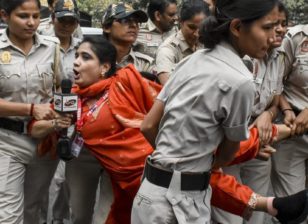
In March 2026, eleven activists were detained by plainclothes Delhi Police officers reportedly without arrest warrants or family notification. Some of those detained were allegedly subjected to torture and ill-treatment in custody.
Activists Umar Khalid and Sharjeel Imam remain imprisoned under the Unlawful Activities (Prevention) Act (UAPA) since 2020 after being denied bail again in June 2026. The CIVICUS Monitor’s Asia Pacific researcher, Josef Benedict, noted that prolonged legal entanglement has itself become a form of punishment for exercising fundamental freedoms.
In April 2026, more than 300 people were detained following a factory workers’ protest in Noida, Uttar Pradesh, where police were accused of using excessive force. Authorities also used excessive force against the Cockroach Janta Party (CJP), a youth-led protest movement, during a demonstration on July 20.
Journalist Ravi Nair was sentenced to a year in prison in a criminal defamation case tied to social media posts critical of the Adani Group. Investigations were launched against the news outlet TeluguScribe under anti-terror legislation, and the offices of the newspaper Asomiya Pratidin were attacked after the outlet drew criticism from Assam’s Chief Minister.
New amendments to the Foreign Contribution (Regulation) Act (FCRA) adopted in June 2026 expanded government control over NGO assets, imposed additional reporting requirements, and further restricted civil society organizations from engaging in political advocacy.
In Jammu and Kashmir, authorities have throttled internet access and targeted human rights-focused social media accounts. Three publishers were also arrested this month over books authorities deemed objectionable.
IAMC urged the U.S. State Department and members of Congress to take the CIVICUS watchlist designation seriously and called for concrete policy responses, including the adoption of the U.S. Commission on International Religious Freedom (USCIRF) recommendation to designate India as a Country of Particular Concern (CPC) for religious freedom violations.