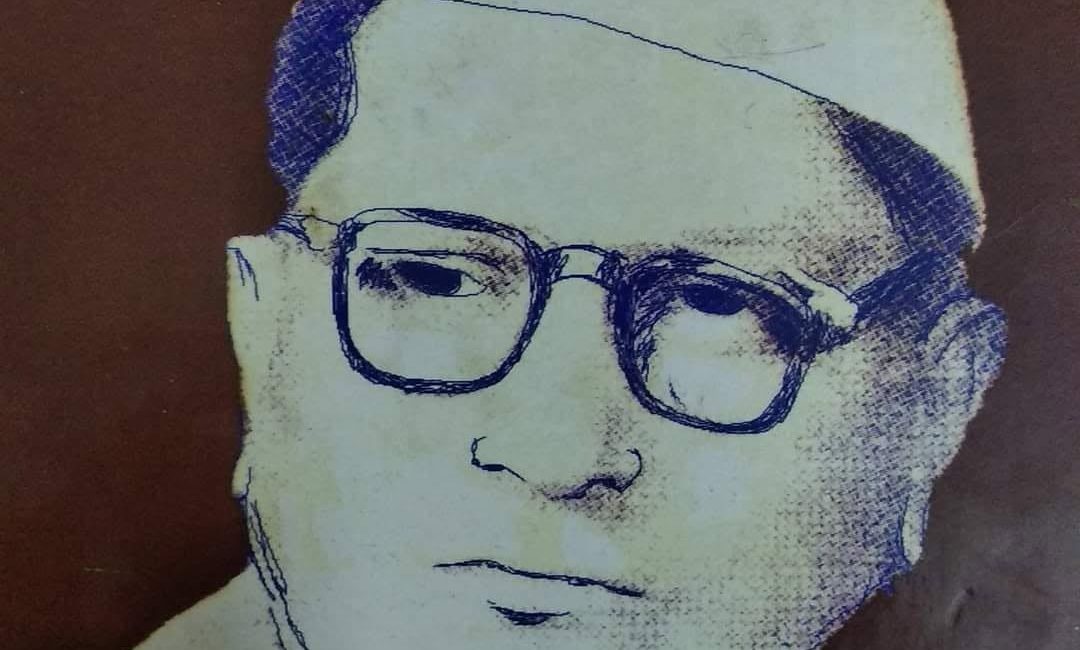
Why India Should Remember Abdul Qaiyum Ansari
By Afroz Alam Sahil
When the Khilafat Movement emerged in British India in 1919, a 14-year-old boy from the eastern Indian state of Bihar answered its call and joined the country’s struggle for independence. From that young age, he remained actively involved in nearly every major movement against British colonial rule. That boy was Abdul Qaiyum Ansari.
At the time, Ansari was a student at Sasaram High School in Bihar. During the Khilafat Movement, prominent nationalist leaders Maulana Muhammad Ali Jauhar and Shaukat Ali, popularly known as the Ali Brothers, toured Bihar to mobilise public support. During their 1919 visit, the young Ansari met them for the first time. He was deeply inspired by Muhammad Ali Jauhar’s warmth and leadership, Inspired by the growing nationalist movement, Ansari decided to leave the British-run government school where he was studying. He then helped establish an independent school that welcomed students who had withdrawn from government institutions after Mahatma Gandhi’s call to boycott colonial educational establishments as part of the Non-Cooperation Movement. The school provided education outside the colonial system while supporting India’s campaign for self-rule.
In 1920, Abdul Qaiyum Ansari was appointed General Secretary of the Dehri-on-Sone Khilafat Committee, marking the beginning of his formal leadership in India’s freedom movement. Later that year, he represented his region as a youth delegate at the Special Session of the Indian National Congress in Calcutta (now Kolkata). During the session, he met Maulana Abul Kalam Azad and saw Mahatma Gandhi in person for the first time. The gathering proved historic, as Congress, under Gandhi’s leadership, adopted the resolution launching the Non-Cooperation Movement, a nationwide campaign of peaceful resistance against British colonial rule that also expressed support for the Khilafat cause.
Ansari’s commitment to the movement soon led to his imprisonment. In February 1922, he was arrested in Dehri-on-Sone for his role in the Khilafat Movement and was jailed in Sasaram until November. His imprisonment did little to weaken his resolve. After his release, he immediately returned to political activism and continued to participate in campaigns against British rule. In December 1922, he attended the Indian National Congress session in Gaya as an observer, where veteran nationalist leader Chittaranjan Das presided over the proceedings.
Ansari remained an active participant in the independence movement throughout the 1920s and 1930s. In 1928, he played a leading role in student protests against the Simon Commission, a British-appointed body that was widely boycotted because it contained no Indian members. During demonstrations on College Street in Calcutta, he was injured in a police crackdown.
In 1937, Ansari founded the Bihar Jamiatul Momin, an organisation that worked for the social, educational and political advancement of the Momin community and other socially disadvantaged Muslim groups. Even while building this organisation, he remained deeply involved in the broader struggle for India’s independence.
By 1938, Ansari had moved to Patna to expand his political work. He established the headquarters of the Jamiatul Momin in the city’s Alamganj neighbourhood and named the building Momin Manzil, which became an important centre of his political and social activities.
Youngest Cabinet Minister
Abdul Qaiyum Ansari was elected to the Bihar Legislative Assembly for the first time in the 1946 provincial elections, representing the Ranchi-cum-Singhbhum Muhammadan Rural constituency. On April 14, 1946, he was inducted into the cabinet of Sri Krishna Singh, the first Premier (later Chief Minister) of Bihar, becoming the youngest cabinet minister in the state at the time.
His growing stature within the Indian National Congress was further reflected when he was included among the party’s nominees from Bihar for the Constituent Assembly of India, alongside prominent leaders such as Rajendra Prasad, Sachchidanand Sinha, and Sri Krishna Singh. The Constituent Assembly was responsible for drafting the Constitution of independent India.
A Nationalist Muslim Leader with a Mass Following
By the early 1940s, Abdul Qaiyum Ansari had emerged as one of the most prominent nationalist Muslim leaders in India, with a substantial public following.
According to Dr. Iqbal Hussain’s autobiography, British politician Sir Stafford Cripps, a senior leader of the Labour Party and Member of Parliament, sought to understand the political influence of Muslim leaders during discussions on India’s future. When he asked Jawaharlal Nehru which Muslim leaders enjoyed significant popular support outside the All-India Muslim League led by Muhammad Ali Jinnah, Nehru is said to have named three figures: Khan Abdul Ghaffar Khan, Abdul Qaiyum Ansari, and Maulana Hussain Ahmad Madani.
Dr. Hussain further writes that Cripps subsequently invited Ansari to Allahabad for an extended discussion, reflecting the recognition he had earned as an influential nationalist voice among Indian Muslims.
Rebuilding Confidence Among Indian Muslims After Partition
The Partition of British India in 1947 left deep social and emotional scars. Large-scale communal violence displaced millions and created widespread fear and uncertainty, particularly among Muslims who chose to remain in India. Rebuilding trust, restoring confidence, and reassuring people about their place in the newly independent nation became one of the country’s most urgent challenges.
Abdul Qaiyum Ansari played an important role in this effort. Alongside leaders such as Dr. Syed Mahmud, Shah Umair, and Ahad Noor, he worked to strengthen the morale of Indian Muslims and encourage them to participate fully in the nation’s future. Throughout his political career, Ansari consistently advocated for Indian nationalism, secular values, and communal harmony.
Through the Momin Conference and later as Bihar’s Relief Minister, he championed the interests of socially and economically disadvantaged Muslim communities while promoting their educational, social, and political advancement within independent India.
A Lifelong Advocate of Education and Literature
After completing his early education in Dehri-on-Sone and at Sasaram High School, Abdul Qaiyum Ansari pursued higher studies at Aligarh Muslim University, Calcutta University, and Allahabad University. Although he built a distinguished political career, he remained deeply committed to education, scholarship, and literature throughout his life.
Ansari was also an accomplished editor and writer. Between 1924 and 1927, he edited the weekly Al-Islah, published from Dehri-on-Sone. In 1934, he became editor of the monthly Masawat. He later collaborated with noted writer Sohail Azimabadi to publish and edit the daily newspaper Saathi in 1948, and went on to edit the monthly Tehzeeb in 1952. He also co-edited the literary magazine Husn-o-Ishq with Maulana Abu Muhammad, further reflecting his interest in journalism and Urdu literature.
His contributions extended beyond publishing. Ansari was associated with the Anjuman-e-Taraqqi-e-Urdu, one of the leading organisations dedicated to the promotion of the Urdu language. He served as a Senate Fellow at Patna University from 1940 to 1951 and became a member of the Court of Aligarh Muslim University in 1952. Throughout his public life, he consistently advocated for expanding educational opportunities, particularly for minority and socially disadvantaged communities.
Born on July 1, 1905, in Dehri-on-Sone in Bihar’s Rohtas district, Abdul Qaiyum Ansari was the son of Maulvi Abdul Haq and Safia Begum.
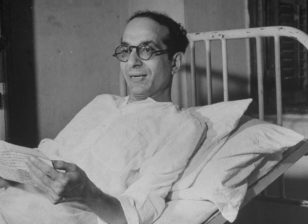
A steadfast believer in Indian nationalism, secularism, and communal harmony, Ansari remained committed to these ideals throughout his life. He died on January 18, 1973, leaving behind a legacy as a freedom fighter, social reformer, educationist, and one of Bihar’s most respected public leaders.
Serving the Poor Until the End of His Life
Dr. Iqbal Hussain, former Principal of Patna College in India, writes in his autobiography: “I witnessed Abdul Qaiyum through every stage of his life, from boyhood to youth, and we remained close friends until his final days. He had many virtues and an extraordinary ability to make friends. Whenever we met, he would greet me with great affection and recall old memories. He was a man of firm principles. He lost the 1951 election, and soon after a new government was formed, he returned his official vehicle and moved out of his large government residence into a smaller bungalow. He chose to travel around the city in rickshaws instead of using a car and never appeared troubled by it. I had no role in his politics. Some of his political opponents would occasionally complain about him to me, but I would stop them by saying, ‘Good or bad, he is my friend.’ After that, no one dared to speak against him in my presence. A notable quality of Abdul Qaiyum was that, despite being active in politics throughout his life, he never appeared distressed, even in difficult situations, and he never complained.”
Abdul Qaiyum was deeply committed to public service. When he became Minister for Prisons, he proposed setting up schools in all prisons to support the education and rehabilitation of inmates so they could reintegrate into society after release. As a pilot project, a high school was established inside Muzaffarpur Central Jail in Bihar. Many prisoners changed their lives after studying there. It remains a rare example in the state. Since its establishment in 1957, at least two hundred inmates completed their matriculation over the next three decades. The school was later upgraded to the intermediate level. The government continues to fund it fully, and it remains an important part of his legacy.
He stayed committed to helping the poor and those in distress until the very end of his life. On January 18, 1973, he was traveling to Amiyawar, where a canal embankment had broken and left thousands homeless. Although he could have sent an official, he chose to go himself since the area was in his constituency. The road conditions were poor, and he walked part of the way before sitting down to rest due to exhaustion. He then suffered a sudden cardiac arrest and passed away.